
Legal Age for Jobs for Teens in India and Rules You Must Know
This article is for 15 to 18-year-old Indian students and their parents who are confused about labour laws, PAN cards, and bank rules for minors. It must clearly explain what work is legal for adolescents in India and how they can legally receive payments.
Legal Age for Jobs for Teens in India and Rules You Must Know
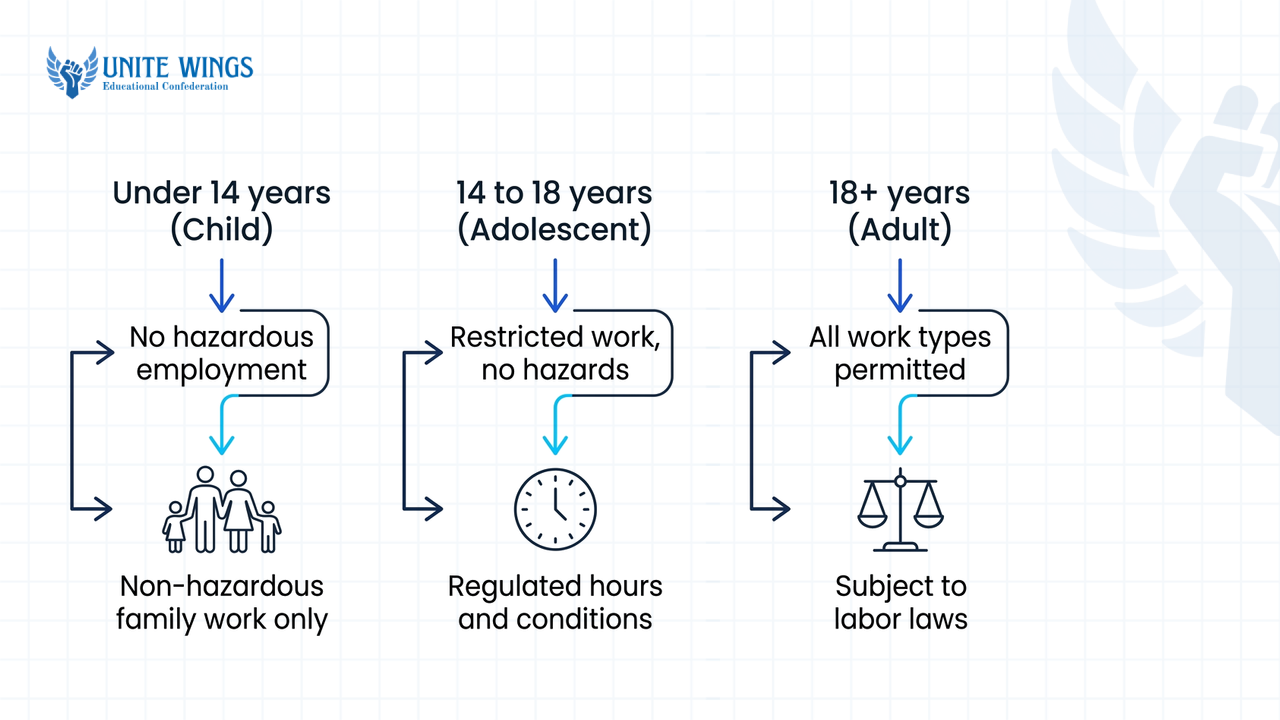
The legal age for jobs for teens in India is 14 years old for non-hazardous work, while hazardous occupations require you to be at least 18. Under the Child and Adolescent Labour (Prohibition and Regulation) Act, 1986 (amended in 2016), anyone aged 14 to 18 is legally classified as an "adolescent" and can take up safe part-time roles, internships, or freelance work under strict daily hour limits.
By the end of this guide, you will know which jobs are legal for your age group, how to get a minor PAN card and UPI ID to receive payments, and how to get freelance contracts legally signed by a parent.
Key takeaways
- Teenagers aged 14 to 18 (classified as adolescents) can legally work in India, provided the job is non-hazardous.
- Adolescents cannot work more than 6 hours a day, cannot work between 7:00 PM and 8:00 AM, and must get a 1-hour break after every 3 hours of continuous work.
- Under Section 11 of the Indian Contract Act, 1872, anyone under 18 cannot sign a legally binding contract; a parent or legal guardian must sign freelance or job agreements on your behalf.
- Minors can get a PAN card (via Form 49A filed by a parent) and use UPI through minor bank accounts or NPCI's UPI Circle (up to ₹15,000 per month) to receive and spend earnings.
Can a 16 year old legally work part time in India?
Yes, a 16-year-old can legally work part-time in India as long as the role is not in a hazardous industry. Under the Child and Adolescent Labour (Prohibition and Regulation) Act, 1986 (amended in 2016) by the Ministry of Labour and Employment, individuals between 14 and 18 years of age are officially classified as "adolescents" and are permitted to work in safe environments, as outlined by FactoHR and The Legal 500.
If you are inside that 14-to-18 age bracket, taking up a part-time role at a local bookstore, tutoring school kids, managing social media for a startup, or writing code from your bedroom is completely legal. According to a 2026 compliance guide by FactoHR, the Child and Adolescent Labour Act remains fully in force and unrepealed even after the transition of updated labour codes.
The law draws a hard line at age 14. According to a 2023 release from the Press Information Bureau (PIB), children below the age of 14 are strictly prohibited from working in any establishment, with narrow statutory exceptions only for helping in family enterprises after school hours or working as child artists in the entertainment and sports industry. This aligns with Article 24 of the Indian Constitution, which bans employing children under 14 in factories or mines, and Article 21A, which guarantees free and compulsory education from ages 6 to 14.
| Age Group | Legal Classification | Permitted Work Status | Key Restrictions |
|---|---|---|---|
| Under 14 years | Child | Strictly prohibited from commercial work | Allowed only in non-hazardous family enterprises (outside school hours) or as artists/sports talent. |
| 14 to 18 years | Adolescent | Permitted in non-hazardous jobs for teens | Banned from mines, explosives, and hazardous factory processes; max 6 hours/day; no night shifts. |
| 18+ years | Adult | Permitted in all legal occupations | Standard adult labour laws and full contractual capacity apply. |
What most students and parents get wrong: Many blogs casually claim that kids under 14 can do part-time work if they call it "helping a business." That is a trap. The family enterprise exception applies strictly to a child's own family business after school hours, never to an outside shop, cafe, or agency. Furthermore, the 2016 amendment introduced penal liabilities for parents or guardians who permit children under 14 to work in commercial setups outside these narrow allowances.
Which jobs are banned for teenagers under Indian law?
Teenagers aged 14 to 18 are legally banned from working in three core hazardous categories: mines, occupations involving inflammable substances or explosives, and hazardous factory processes. This restriction comes from the Schedule of the Child and Adolescent Labour Act and aligns with guidelines from the Ministry of Labour and Employment and the International Labour Organization (ILO).
When you are looking at jobs for teens, the law does not care whether the role is called an "internship," "apprenticeship," or "summer gig." It cares about the physical environment and the processes involved. According to FactoHR's 2026 analysis of the Act's Schedule, adolescents are strictly barred from:
- Mines and collieries: Any underground or above-ground mining operation, stone quarries, or mineral extraction sites.
- Inflammable substances and explosives: Petrol pumps handling bulk fuel storage, fireworks manufacturing units, match factories, or chemical warehouses.
- Hazardous processes under the Factories Act, 1948: Heavy manufacturing units, chemical processing plants, cement manufacturing, metal casting, or any factory floor involving toxic fumes, heavy machinery, or extreme heat.
For high school students and first-year college freshers (who are often 17 when they start semester one), this leaves the entire knowledge economy wide open. You can legally work in graphic design, video editing, content writing, front-end web development, retail billing desks, customer support (day shifts only), and campus ambassador programmes. If you want to build real work samples that clients and startups take seriously at age 16 or 17, the AI Portfolio Sprint walks you through picking a project, building it with AI assistance, and publishing it online.
Companies take age verification seriously because the legal consequences are severe. According to PRS Legislative Research, employing a child or an adolescent in a prohibited occupation carries criminal penalties of 6 months to 2 years in prison, a fine between ₹20,000 and ₹50,000, or both. While central laws are uniform across India, state-level labour inspection rigors vary, with higher concentrations of informal adolescent labour observed in states like Uttar Pradesh, Bihar, and Rajasthan.
How many hours can a teenager legally work per day in India?
An adolescent aged 14 to 18 can legally work a maximum of 6 hours per day in India, and that 6-hour cap includes waiting time and rest intervals. Under Section 7 of the Child and Adolescent Labour (Prohibition and Regulation) Act, 1986, employers cannot ask teenagers to work overtime, night shifts, or continuous stretches over 3 hours, as documented on Constitution of India.
If a local cafe, coaching institute, or startup hires you at age 16 or 17, they cannot put you on a standard 9-hour adult shift. Section 7 of the Act lays down five non-negotiable shift rules that every employer and teen worker must follow:
- The 6-hour daily cap: Your total shift cannot exceed 6 hours in a single day, inclusive of the time you spend waiting for work to be assigned and your rest breaks.
- The 3-hour continuous work limit: Under Section 7(2), no adolescent can work for more than 3 continuous hours without a mandatory rest interval of at least 1 hour. For example, if you start at 2:00 PM, you must stop by 5:00 PM for a 1-hour break, leaving at most 2 more hours of actual work for that day.
- No night shifts: Under Section 7(4), no adolescent is permitted to work between 7:00 PM and 8:00 AM. Even if you are doing remote customer support or managing a Discord server for a brand, an Indian employer cannot legally put you on a late-evening or overnight roster.
- Zero overtime and no double shifts: Under Section 7(5) and 7(6), adolescents are strictly prohibited from working overtime or working in two different establishments on the same day.
- Mandatory weekly holiday: According to FactoHR's 2026 compliance checklist, employers must grant every adolescent worker at least one full day of rest each week.
When you interview for a part-time role or internship before turning 18, state your schedule clearly. If a manager asks you to stay until 9:00 PM to close a store or pull a 10-hour weekend shift, politely point out that labour rules cap adolescent shifts at 6 hours ending before 7:00 PM. Legitimate HR teams will adjust your hours immediately to avoid compliance violations.
Do teens need parental consent to sign a freelance contract?
Yes, teenagers under 18 need a parent or legal guardian to sign any freelance, internship, or employment contract on their behalf. Under Section 11 of the Indian Contract Act, 1872, anyone under 18 is a minor and lacks the legal capacity to enter into a binding agreement, making any contract signed directly by a minor void ab initio (void from the very beginning), as explained by LegalInsaan and Pahuja Law Academy.
This rule comes from the landmark legal ruling Mohori Bibee v. Dharmodas Ghose, which established that a minor's signature on a commercial contract has zero legal enforceability against the minor. Here is why this matters for your job hunt: while the labour law says you can work at age 16, the contract law says a company cannot sue you or enforce a Non-Disclosure Agreement (NDA), copyright transfer, or service agreement if you sign it yourself.
Because of this enforceability gap, most corporate HR departments, freelance marketplaces, and funded startups will reject an onboarding form if they see a birth year showing you are under 18. According to a 2026 guide by Lawyered, the only way to make a teen freelance agreement legally valid is to have a parent or legal guardian execute and sign the contract on your behalf.
If you land a freelance gig editing reels, designing posters, or building websites, do not hide your age. Instead, send this exact email line to your client before they draft the agreement:
"Since I am currently 17, Section 11 of the Indian Contract Act requires a legal guardian to execute commercial agreements on my behalf. Please address the contract to my parent, [Parent's Full Name], signing as the natural guardian for [Your Full Name], so the copyright assignment and terms are fully binding for your company."
Clients love this because it shows you understand business compliance better than most adult freelancers. Once you have your parent ready to co-sign your agreements, the Freelance with AI masterclass shows you how to find your first paying client, deliver work using AI tools, and collect your first testimonial.
Can a minor get a PAN card and UPI ID to receive salary?
Yes, a minor of any age can get a PAN card and a UPI ID in India to receive salaries or freelance payouts, provided a parent or legal guardian sets them up. According to the Income Tax Department and TaxGuru, there is no minimum age for a PAN card, and banks offer minor savings accounts with UPI access or parental delegation via NPCI's UPI Circle.
When a company or client pays you for an internship or freelance project, their finance team will ask for two things: your PAN (to deduct TDS if applicable and record the expense) and a bank account or UPI ID for the transfer. Here is how to set up both before you turn 18, along with the tax rules you need to know.
Step 1: Apply for a minor PAN card (Form 49A)
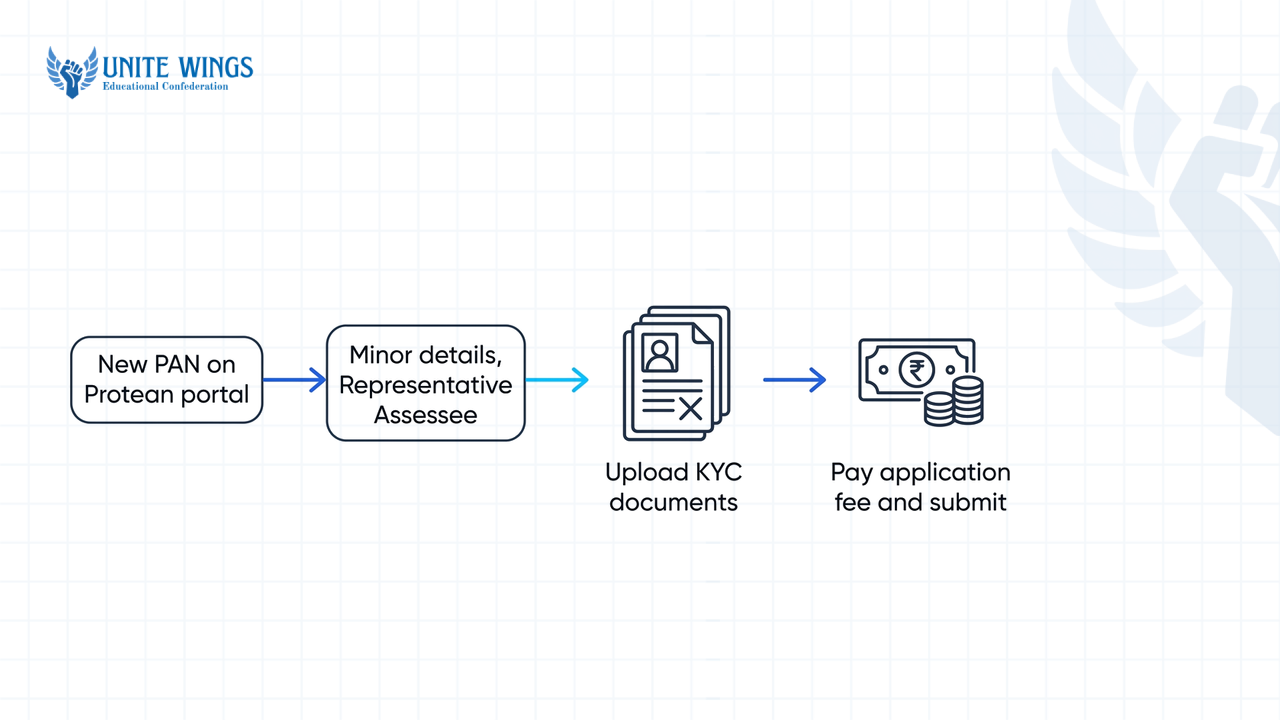
You cannot file for a PAN card independently under 18. According to 2026 guidelines from Protean eGov and Paisabazaar, a parent or legal guardian must apply on your behalf as a "representative assessee" using Form 49A:
- Go to the official Protean (formerly NSDL) or UTIITSL portal and select New PAN - Indian Citizen (Form 49A).
- Enter the minor's details (name and date of birth), then fill in the Representative Assessee section with the parent's full name and address.
- Upload the minor's proof of age alongside the parent or guardian's KYC documents, as detailed by DocuPro.
- Pay the application fee and submit.
Important limitation to watch out for: According to Protean, a PAN card issued to a minor does not feature your photograph or signature. Because of this, automated video-KYC forms on fintech apps, stockbroker platforms, or payment gateways will reject a minor PAN card. Use your PAN number strictly to give to HR teams or clients for invoice billing, and remember that you must officially update the PAN with your photo and signature once you turn 18.
Step 2: Set up a minor bank account and UPI ID
According to a 2026 guide by Shriram One, UPI apps do not have an independent "minor account" button; instead, UPI is layered on top of a minor savings account opened at a bank with parental participation.
Bank policies on when you can operate the account yourself vary widely across India—so always check directly with your branch:
- Self-operated minor accounts (Ages 10+ or 15+): Several commercial banks allow teenagers above age 10 or 15 (such as SBI's 'Pehli Udaan' scheme) to open a self-operated minor savings account. Once your mobile number is linked to this account by the branch, you can generate your own UPI ID with restricted daily transaction limits to receive client payouts directly.
- Guardian-operated accounts: Some banks require the account to be strictly guardian-operated until you turn 18 (and a single 2026 source notes this is standard for children under age 10). In this setup, the UPI ID is tied to your parent's mobile number, and payouts land in the joint account.
- UPI Circle for spending: If you do not have a self-operated bank account, NPCI's UPI Circle framework allows a primary user (your parent) to delegate digital spending power to your phone number up to a monthly limit of ₹15,000 without sharing core bank credentials, according to 2025 guidelines from Razorpay.
Step 3: Keep your freelance income tax records clean
How is your income taxed if you earn money at 16 or 17? Under Section 64(1A) of the Income Tax Act, minor income is typically clubbed with the parent's income. However, income that a minor earns independently through manual work, personal skill, or specialized talent can be taxed separately under the minor's own PAN, which changes how your parent files the Income Tax Return (ITR). Keep every invoice, client contract, and bank statement in a Google Drive folder so a Chartered Accountant can classify your earnings as skill-based income at the end of the financial year.
How to start earning legally before you turn 18
You do not need to wait until college graduation to build work experience and earn your own money. Follow these four steps this week to set up your legal and financial foundation:
- Apply for your minor PAN card today: Sit down with a parent for 15 minutes, open the Protean Form 49A portal, and apply using their KYC as your representative assessee so you are ready when a client asks for your PAN.
- Open a self-operated minor bank account: Visit your family's bank branch to open a minor account for the 15–18 age bracket with your own mobile number linked, or set up UPI Circle with your parent for everyday transactions.
- Prepare a guardian-signed contract template: Draft a one-page freelance agreement where your parent is listed as the natural guardian signing on your behalf under Section 11 of the Indian Contract Act.
- Pick a digital skill that fits the 6-hour rule: Focus on remote project-based work—such as graphic design, website building, or content writing—that you can finish between 8:00 AM and 7:00 PM without interfering with school or coaching classes.
Turn your skills into your first paid project
Once your parent is ready to co-sign your agreement and your bank account is set up, you need a way to find real clients who pay. In the Freelance with AI masterclass, you will learn how to pitch one small client, deliver professional work using AI as your assistant, and walk away with your first verified client testimonial and payout.
Frequently asked questions
Can a 16-year-old legally do a part-time job at a cafe or retail store in India?
Yes, a 16-year-old can legally work at a cafe or retail store in India as long as the work is non-hazardous. You cannot operate dangerous kitchen machinery, your total daily shift cannot exceed 6 hours (with a 1-hour break after 3 hours), and you cannot work between 7:00 PM and 8:00 AM.
What are the penalties if a company hires a 13-year-old in India?
Hiring a child under 14 for commercial work is a criminal offence under the Child and Adolescent Labour Act. Employers face imprisonment between 6 months and 2 years, a fine ranging from ₹20,000 to ₹50,000, or both. The only exceptions are non-hazardous family enterprises after school hours or child artist roles.
Can a minor sign a freelance client agreement or content writing contract online?
No, a minor under 18 cannot legally sign a binding contract in India. Under Section 11 of the Indian Contract Act, 1872, any agreement signed by a minor is void ab initio (void from the start). To make a freelance contract legally valid, your parent or legal guardian must sign it on your behalf.
Can a 15-year-old get their own UPI ID or Google Pay account?
Yes, a 15-year-old can get a UPI ID in two ways. You can open a self-operated minor savings account at a bank that permits independent digital access for ages 10+ or 15+, or your parent can add your mobile number as a secondary user via NPCI's UPI Circle, which allows up to ₹15,000 per month in delegated transactions.
Can a minor file their own income tax returns on freelance earnings?
Normally, a minor's income is clubbed with their parent's income under Section 64(1A) of the Income Tax Act. However, money earned directly through a minor's own manual work, skill, or special talent is exempt from clubbing and is assessed separately under the minor's PAN, filed by the parent as a representative assessee.
Why is my minor PAN card getting rejected on online KYC portals?
A PAN card issued to someone under 18 does not include the holder's photograph or signature on the card. Because automated digital KYC systems scan for a face match and signature, they reject minor PAN cards. You must update your PAN card with your photo and signature upon turning 18.
Newsletter
Stay updated with our latest news and insights.